by Natasha | Nov 27, 2025 | pain during sex, Partner sex, Sexual liberation, Vulnerability, Vulvas |
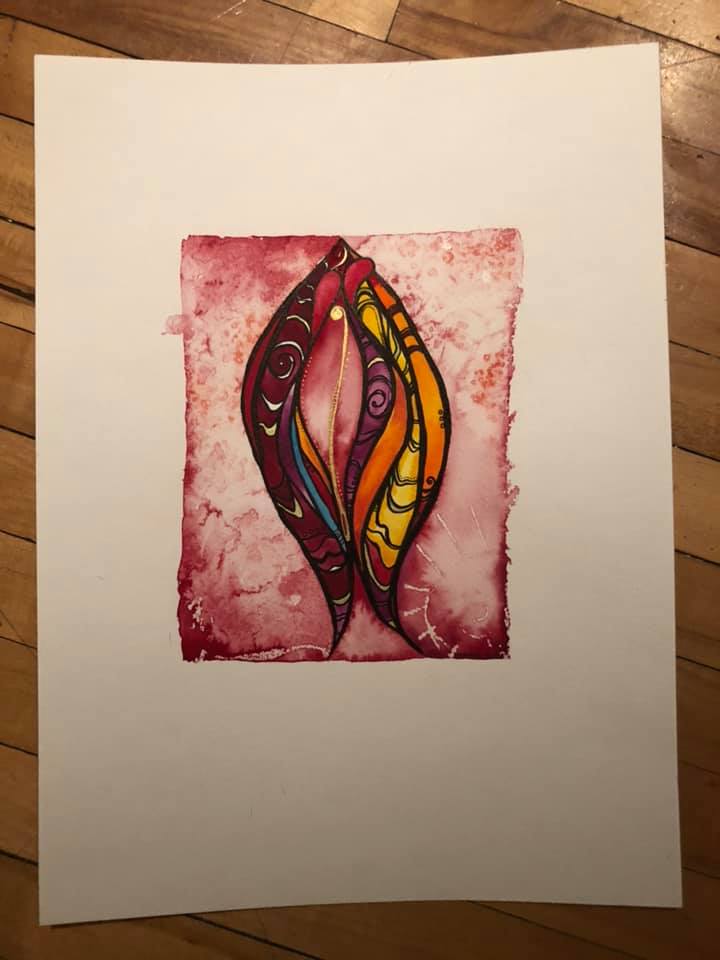
When a body has learned to defend itself from harm, it often shows up for women as extreme over stimulation when touched, numbness or pain. When the armor (that was created to protect from further harm) is no longer needed, it can be frustrating for the woman who just wants to feel pleasure and enjoy sex. In situations like these, I help them learn to take the power back through attuning to their own body, listening and developing awareness about what they want and need moment to moment. To help their defenses back off and their armor dissipate, their nervous system needs to know that she is in control and will choose what is right and best for herself. I liken it to her best friend defending her from a jerk until she sees she can defend yourself.
Sometimes, in situations such as these, pleasure can feel like an impossible goal and the woman may become disheartened that she isn’t experiencing it. Being treated as “sexually dysfunctional” for years, what’s wrong, becomes the narrative. In fact, the “dysfunction” is simply our teacher reminding us where guards are up and that it hasn’t yet felt safe to let them down. When this happens, we focus on bringing her back to what I call baseline or, as my client yesterday said, “neutrality.” “It feels neutral, like there’s space” she said with a smile. This incredible place of neutrality — where there’s no longer pain, just present moment connection and awareness — is where possibilities of pleasure exist.
It’s incredible to watch and feel the guards come down and a vulva come to life, fill with color and plumpness. To feel my finger welcomed inside like a warm hug – no tension, guarding or resistance. “Your vagina feels alive, plush, soft and completely normal” I say. “Take it in, receive it, feel what neutrality feels like in your body. There’s nothing wrong with you at all, you’re just helping your guards come down.” Eyes glistening, she smiles receiving it in. As she satiates in this space of neutrality we joke that we could be watching Netflix for how relaxed her body is. Sometimes she notices resistance wanting to come up in other areas of her pelvis — unsure if it’s really safe to be this soft and relaxed. She notices them, we recognize them as friends double checking in that she’s okay, and with her soft exhale she brings her attention back to the spacious bliss of neutrality.
by Natasha | Jun 2, 2025 | Awakening, Intimacy, orgasm, Partner sex, Self loving/masturbation, Sexual liberation |

When I began my journey of sexual awakening thirteen and a half years ago, I viewed and experienced sex as a way to please partners’ and feel loved. I had never orgasmed during partner sex or from anyone pleasuring me and, until then, it hadn’t really occurred to me that sex could be for my pleasure too. I knew I was supposed to look like I was enjoying it, but I didn’t know that I could actually enjoy it. I masturbated a lot growing up and experienced orgasm through that, but in all the sex education I received, no one had told me that what I experienced masturbating could be experienced in sex. In fact, I had no idea that pleasure had anything to do with sex at all.
At the age of 32 I realized that I was living my life for others, and my own unacknowledged needs (apart from making others happy) were suppressed so deep that I didn’t know where to even begin finding them. Wanting to connect to myself, I began a daily practice of touching my body and feeling through my fingertips to discover what I needed. In time, with this touch, I upgraded my childhood masturbation method to a more full body experience of pleasure and orgasm. Inspired by the legacy of Betty Dodson©, I decided to incorporate masturbation into partner sex and in doing so, “owned my right to pleasure” as she put it. It took a bit to become unapologetic in this, but once I did, I orgasmed every single time I had sex with my husband. If It happened that he came first, I made sure that our sexual encounter didn’t end until I orgasmed as well. I was embodying what Betty taught me and, through this lens, everything changed.
Now that I was getting something from sex as well, it became something I wanted to do often — not only for him, but to meet my own sexual needs. Knowing what worked for me and not waiting for him to step up and offer me that, I never had to worry about not orgasming. It was up to me. Once I had achieved a high level of proficiency in this area, I felt resourced enough to step back and assess the quality of my sexual experiences. I wondered what other needs I had in intimacy now that this baseline one was filled. With this new level of discernment, I realized that I was “well fed” with orgasms so to speak, and now wanted to focus on the quality of my intimacy. I longed for things I was afraid to ask for — sensuality, slowing down, deeper emotional connection, touching and extended pleasure states. As I began stating my needs and asking for these things, I realized that they all involved a more willing partner.
Nearly fourteen years later, I’ve gone through divorce and built a successful business supporting individuals and couples in all aspects surrounding intimacy. Remarried now, my own sexual intimacy is centered around shared touch, extended states of pleasure, connection and taking time – I know orgasm will always be a part of it — so I focus more on expanding and savoring the journey.
I often hear women who aren’t orgasming in sex, dismiss it as “unimportant” and talk themselves out of it by maintaining that they’re “fine” having sex to feel connected and to keep their partner happy. Ironically these same women often come to me for help with “low libido” (as I once had). I remind them that having sex for someone else’s needs, or as another task on the to do list gets old quickly and it’s no surprise they don’t feel a libido for it. At the same time I often read articles written by sex educators or women proficient in orgasming with partners’, talking down to women who are focused on orgasm. They speak as if orgasm as a goal is for “basic” people and they’re somehow missing the whole point. When I hear this I’m reminded of a quote by Kahlil Gibran I discovered over twenty years ago that has stuck with me since:
“How bravely the glutton counsels the famished to bear the pangs of hunger.”
It’s easy to say orgasm doesn’t matter when you know you can have one whenever you want. It’s easy to focus on the quality of an experience when you feel you have choice in how the experience goes. Many women were raised with so much shame around pleasure that they haven’t learned to orgasm or don’t feel comfortable seeking it out as a right to expect as part of their intimacy.
It is absolutely okay to want to orgasm each and every time you experience sexual intimacy with your partner or yourself. If the narrative was reversed and men were told it didn’t matter if they orgasmed, they’d be rioting in the streets – and rightly so! There is nothing wrong with wanting orgasm for yourself and being committed to that as a baseline in your sexual intimacy. Orgasms feel great, are good for us, release tension, stress and give us amazing feel good chemicals. Why wouldn’t we want them? And, if orgasm is easy for you, it is also okay to want to feel even more satiated in experiences that are less goal-oriented and more savory — like a slow cooked meal vs. fast food. Speaking as a woman who didn’t know how to orgasm in sex for most of my life, or understand it to be an equal right for all, I now know it as such. If orgasming isn’t a part of your proficiency yet, it is well within your right to seek it out as something important, meaningful and fundamental to being human. It is okay to explore your own body to discover what works best for you, incorporate that with partners, acknowledge time needed for it to happen and ask for help achieving it. You have that right. And, if orgasmic people (partners or otherwise) suggest to you it’s not important, you’re welcome to tell them to kindly fuck off. 🙂
by Natasha | Aug 23, 2024 | Erectile Dysfunction, Sexual liberation, Vulnerability |
This blog was written and shared with me by one of my clients in an effort to help other men with one of the most common issues that men come to me for. His words are honest, vulnerable and deeply self reflective.
“The work I have been engaged in as a result of our sessions and your guidance through the challenges I have been facing is deeper than I may have previously thought. I think it may in fact be life changing. My perspectives, feelings, and desires–each of these have been shifting and my mental, spiritual, physical, and emotional experiences have been responding to said shifts.”
From Boy to Man: Masculinity, Sex, and the Self
This blog is an autobiographical account of reflections on lived experiences and the subsequent analysis that showcases that for me the roots of male sexual disfunction go deeper than the physical and reach back further than the recent past or present. In what follows I will share and analyze experiences of my own life, connecting the roots of these past experiences to more recent experiences of erectile dysfunction (ED) and other foundational views about desire and arousal that were ill-informed and in need of address. I will conclude this by sharing my journey on addressing my erectile dysfunction and offer reflections that have come from being engaged in this deep, transformative, and even life-changing work.
The Boy
As a boy the seeds of arousal, libido, and sexual desire that were sewn in me were intimately connected with anxiety, competition, and a deep laden sense of inadequacy that barely permeated the surface: I didn’t find the problem so much as the problem found me. Early on earning female attention was represented to me as a game that I needed to win or an experience I needed to manipulate. I did not feel I was inherently worthy of love. The prize, ultimately, was gaining access to the ever-illusive experience of sex and the scarce message that I indeed was o.k., had value, and was worthwhile. These seeds were sewn in me by masculinity as taught through movies, television, competitive sports, older men, and pornography, all of which were initially presented to me in a formative way in grade four or five. The message was both clear and confusing but later unpacked to be: The sexual desire you are to control should also be insatiable, and your worth as a man is directly reflected in the opposite sex’s evaluation of you, of which there is no higher measure of success than sexual intercourse. Rife with power dynamics, heteronormativity, and misogyny, it’s a mystery that any of us would expect this messaging to yield anything healthy.
Masturbation
As the seeds of my sexual psychology began to grow, life also continued to move along. I found the satisfaction of masturbation during the same time that my home life became unstable and unpredictable. Turmoil, combined with the socially enforced idea that I, as a boy becoming a man, was supposed to cultivate an insatiable, almost uncontrollable sexual desire led me to form a deep bond with pornography. Pornography and masturbation became where I learned about sex between men and women, and a space where I could go to access pleasure that would help me cope with the dysfunction surrounding me. What pornography did not show me was what it meant to connect with a partner in a non-sexual way, or how to move through the courtship period of building a relationship, how to explore sexual pleasure and sexual connection with myself in a healthy way, or how to deal with and ease the pain of the non-sexual issues from my life in a manner that was not masturbation.
Wounds
Throughout my preadolescents and my adolescence, one of the most profound wounds I experienced was a lack of focused attention. I was routinely neglected and left to my own devices and in pornography and masturbation I found a way to access and provide for myself the focused attention that was lacking from my life that I so deeply craved. In addition to neglect, I received harmful messages about sex and women. The messaging that all too many men receive about sex is often toxic and can be very confusing. Boy’s and men’s messages about sex say that they do not deserve sex but that they need sex, that their sexual desire is shameful but is connected to their masculinity, that they have to fight and compete for sex, that sex is acquired or won, that sex is a measure of their worth as a person, and that they need to need sex to demonstrate their virility but also control their urges to demonstrate their power. Unfortunately, this list is not exhaustive. The amount of problematic messaging that boys and men receive about sex seems limitless. Finally, the messaging that young boys and men receive about sex also tends to dehumanize their sexual partners, reducing them to objects of desire and robbing all parties involved of true sexual pleasure.
The Man
Having now grown from a boy into a man, equipped with a daily pornography habit, my body began to betray me, making me unable to maintain or sometimes even achieve an erection. Scared, I was forced to address my body’s betrayal. The prescription, equally terrifying at the time, was to stop using pornography and to abstain from masturbation. This was terrifying as both pornography and masturbation were what I had previously used to ease the pain caused by wounding I had received throughout my life. Working through these fears and moving into healthier alignment with myself and my sexuality soon proved to be the most fun, interesting, and life and perspective changing work I had even endeavored upon. As such, I would like to share some of my reflections and learnings from that time, though it should be noted that the learnings are still coming—no pun intended.
Reflections
Reflection One: In stopping pornography we can come into closer, healthier, and deeper contact with ourselves, our partners, and our genuine, pure states of arousal.
Reflection Two: It has only been in my 30’s, without the use of pornography and daily masturbation, that I have begun to experience pure sexual pleasure, free from outside stimuli, motivating factors, or the drive of early childhood traumas.
Reflection Three: Masturbation and by extension my erectile dysfunction grew from dysfunction and wounding that harmed me far before I had the cognitive ability to deal with them in a healthier way.
Reflection Four: When abstaining from pornography and masturbation a critical component to my success was identifying triggers. Social media, television, advertising, everywhere we look, we are inundated with sexual imagery and inaccurate depictions of what it means to be a man that can trigger our arousal and push us to use pornography.
Reflection Five: If you are struggling with erectile dysfunction and trying to abstain from pornography or move forward in a new way sexually, give your body and yourself time to adjust before looking for results. This work is deep work and can be truly life changing. It’s worth taking time and being patient with yourself. Sit with yourself in a state of loving care and attention.
by Natasha | Oct 3, 2023 | Body Image, Bodysex testimonial, Bodysex workshops, Posts, Related Bodysex, Self loving/masturbation, Sexual liberation, Workshops |

It’s the eve of my last Bodysex workshop and, even though I’m choosing to take a break from facilitating, it’s scary to not know if I’ll ever return to it. It feels like I’m saying goodbye to a lover that I’m still deeply in love with, but the relationship isn’t nourishing me in the ways it used to. I’m already feeling the grief of all that I’ll miss; the feeling of home in the circle, the honor of sitting beside women as they open, share and connect to their vulvas. Seeing and being seen fully, the orchestra of our self pleasure, the smell of sweat and pussy, Marika’s hand resting on my leg as we hold space, my head on Justine’s lap as we discuss how the weekend went, Patti’s bare bum sticking out from her apron as she cooks — and the absolute normalcy of all of it.


Two days later the workshop is finished and, filled with gratitude and love, I pack up my supplies for the last time. I can feel myself wanting to cling and hold on — just a bit — to one last touch of my lovers hand as I say goodbye. I don’t want to let go of the connections, the memories, the endless internal spiral of self confrontation, awareness and integration. One of the gifts of Bodysex is that the eyes of the other women are a mirror for me, always showing me what’s hard to see on my own. In that mirror I see in my grasp to hold on — the reason I’m letting go.

I’m not that same woman I was 8 years ago who sat shaking outside Betty Dodson’s apartment before my first Bodysex workshop — terrified that all the women in the circle would be shocked and disgusted by my naked body. I’m not the same woman who was so ashamed of her scarred and stretched stomach, that she spent years repeating the mantra over and over in her head before allowing a man to see her naked: “This is my body and I accept it. If he doesn’t accept it, he don’t accept me and he’s not my person.” And I’m certainly not the same woman who only had sex to please, keep the peace or in an attempt to feel loved.

Looking in the women’s eyes this weekend, I saw myself as a woman who feels most beautiful when I’m naked and surrounded by other women, in nature or locking eyes in intimacy with my husband (ideally all of the above! He he). I saw in myself that I accept and love my body — and recognize it as an illustration of my history, a creator and giver of life and source of infinite pleasure. I saw myself as a woman who now owns pleasure because it’s my inherent right as a human being and no longer finds it revolutionary to orgasm. I live and embody this right.


Driving away from Drummondville, I feel my fingers slip away from my beautiful lover Bodysex. I’ve been gently easing into this moment for months, with the same care and tenderness I took in preparing for my children to leave the nest. It doesn’t make it any easier, but I can feel excitement deep inside me at the possibilities of other paths I can explore. I wonder what will be different about the woman I am in another 8 years? What will she have learned that I haven’t yet? What parts of herself will she confront that are still hiding behind armor? What will she find that nourishes her the most?

As the plane takes off, I close my eyes and imagine myself back in the circle with the 321 women who’ve shared it with me. I smell the coconut oil, feel the warmth of their hands in mine and — all around me, I’m met with an abundance of love, acceptance and encouragement. With my eyes, my body and my heart, I offer the same back to them. I hear Betty’s words whisper, “Natasha, the circle of sisters will always carry you, as long as you share your honest “I’s.” Goodbye for now my lover, Bodysex. This is my honest I.
Much love, appreciation and gratitude for Betty, Carlin, Patti, Justine, Marika and all of my Bodysex sisters.I love you.

by Natasha | Jan 24, 2022 | For couples, Posts, Sex and mothering, Sexual liberation |

When I was first exploring my sexuality, I didn’t resonate with using the terms masculine and feminine to describe myself — especially not when they applied to sex. I resonated with the idea of these energies co-existing, but not how having both of them could help me have a balanced sex life. Now, ten years later on this journey, I resonate much more with these terms and understand why that balance can be so helpful in sex and intimacy. At times in my explorations, I’ve swayed heavy to one side or the other, and thankfully this pendulum swing has been helpful in opening up a longing in me for the side that was missing.
I’ve always identified strongly with certain aspects of traditional femininity. I became a mother to a big family at a young age and the role of nurturing my children and husband felt at that time, like my highest purpose in life. Motherhood allowed me to tap into the soft, nurturing parts of myself that longed for connection and intimacy — through tending to the needs of others. Caring for my family became my attempt at meeting those needs in myself and yet, I often felt like something was missing. Without embodying my masculine side, I found it difficult to ask for what I wanted and needed or make decisions for myself that conflicted with my ability to care for others. My femininity lacked self-care that may have helped me feel nurtured or beautiful or comfortable in my body, and was solely focused on the needs of others. I stuffed my own needs down as deep as I could to protect this. As my children got older and built their own relationships and interests, parenting no longer met my need for intimacy, and the deep longings I felt bubbled to the surface. Slowly, I pulled them out one by one and learned that I liked to feel my body move through dance and to wear dresses and to feel pretty — for myself — and that femininity wasn’t only about caring for the needs of others.
Around this same time I discovered my pleasure in a more embodied way and the nurturing part of me that used to have sex for my husbands pleasure, started wanting pleasure for myself. It took awhile to learn how to do this, but eventually I no longer cared if he connected with me before we had sex as I’d long since been asking for. I learned that I could have sex solely for pleasure — as he had seemingly done for years and years — and that sometimes that was exactly what I needed. I learned to own my right to orgasm by making sure that, with the help of my hands, I always orgasmed in sex. I initiated sex, turned on the lights and took the pillow off of my face that I’d used for years to hide in shame. I didn’t have to feel shame to live in pleasure. It was my BIRTHRIGHT. I was doing what men have done for centuries and took ownership of my own pleasure. I’d believed my husband’s pleasure to be a given and that it was necessary for me to provide that for him during the 17 years we were together. Until I found my masculine, I couldn’t imagine believing my pleasure could be a given or necessary too.
High on this masculine energy I rode my right to pleasure as hard a cock. (see, just writing about my masculine gets me in that mode!) When my marriage ended, I continued seeking my right to pleasure in a masculine way — rarely asking for the nurturing or connection I also needed, or even discerning adequately who I was experiencing pleasure with. There are moments I remember in sexual situations where I felt almost out of body, wondering why I divorced my husband just to be back in the same situation of disconnected sex I’d wanted out of. I could orgasm just fine, but the longing for connection and intimacy and being seen, was still there.
Listening to my feminine, I started practicing discernment and realized that deep intimacy and pleasure (beyond just a basic “get me off” orgasm) happened when I felt relaxed and safe. Just “taking” my orgasm wasn’t enough anymore and I still longed for the more I craved in my marriage. I wanted pleasure yes, but also connection, softness, surrender. To have this, I had to learn to trust and to receive — both very feminine qualities. I realized it was much easier to long for these things than to actually make myself open to them, but I committed to practice. Using breath, presence and masculine confidence, I learned to soften my body like a jelly fish or sea sponge — able to absorb and feel the subtlest nuances of pleasure. Slowly I opened my legs, arms, hands and heart to myself, my partner and the universe. Allowing the feminine in me to receive and soften meant I could allow my partner to pleasure me for as long as I needed. When I felt insecure, the masculine in me was helpful as the strong voice in my ear reminding me, as it’s reminded men for centuries, that “this is my right!” Finally, the two parts were working together.
Looking back I feel that as a traditional, non sexually embodied woman — so far swung on the pendulum in that way — it was necessary for me to swing as far as I could the other way and find my masculine. I needed to own my right to pleasure and exercise it as my own, so that I could come back and own my right to embody my full femininity too. In order to surrender to pleasure, love and allow myself to be fully seen, I needed to know I deserve that. It’s my right as a human being. Regardless of gender or sexual orientation, I believe these two energies exist in all of us, as does the potential to actualize them. To know if your pendulum is swung too far in one way, you can simply ask yourself “what else am I longing for in my sexual and intimate life?” Your answer, is an invitation to explore what’s missing.
by Natasha | Aug 22, 2021 | Body Image, Bodysex workshops, Sexual liberation |

I spent a night with my friend and Bodysex® sister on the beach this summer. As soon as we found a quiet spot — we got naked, made a fire, cooked dinner, practiced peeing right where we’re sitting, shared stories and talked about how vulnerable it can feel to follow our hearts and really own it. This blog is inspired by her and my Bodysex® experiences:
Bodysex® reminds me of the sacredness of my own pleasure. That it’s my right as a human being to feel pleasure. Bodysex® reminds me that in the absence of a partner, or if I’m with a partner who’s unwilling to fully support my pleasure — I know my own body and can pleasure myself. That with this tool I never have to live a pleasureless life again — never have to have pleasureless sex again. That it’s okay to want a partner to be as good as I am (with myself) in bed.
Bodysex® reminds me of the familiar softness of a woman’s body and why it’s beautiful to look at and to touch. It reminds me that we all look better without clothes on, that the jiggles are super hot and fun to play with, and why our lovers are lucky to touch and make love to us. We feel so good. We, as everyday women, are goddesses.
Bodysex® reminds me of why women were persecuted for being “whores” and “witches.” That in our embodied pleasure we are magical, mystical beings that would obviously cause fear in insecure men. When we realize our magic, we can no longer be oppressed and, for those brave enough to love us, we share our magic with them.
Bodysex® reminds me why I need in person connections to feel seen. I’m a multidimensional woman and I want to be seen as that. I’m sexual, yet not just that. I’m motherly, yet not just that. Sometimes I do great things, but I’m not only that. Sometimes I do shitty things, but I’m not only that. I’m like a quilt with many different squares and colours and sections torn and frayed while others are intact. I want to be seen as all of that.
Bodysex® reminds me through stories, body language, eyes and sounds of our pleasure that we are all of these things. Sexual, soft, magical, multidimensional, goddess, witches. What is better than that?
